The Mystery of the Dog Who Can't Learn
You may have experienced this before. That dog who no longer responds. That cat who suddenly becomes aggressive. That animal who seemed so cooperative... until they weren't anymore.
What if the problem wasn't behavioral?
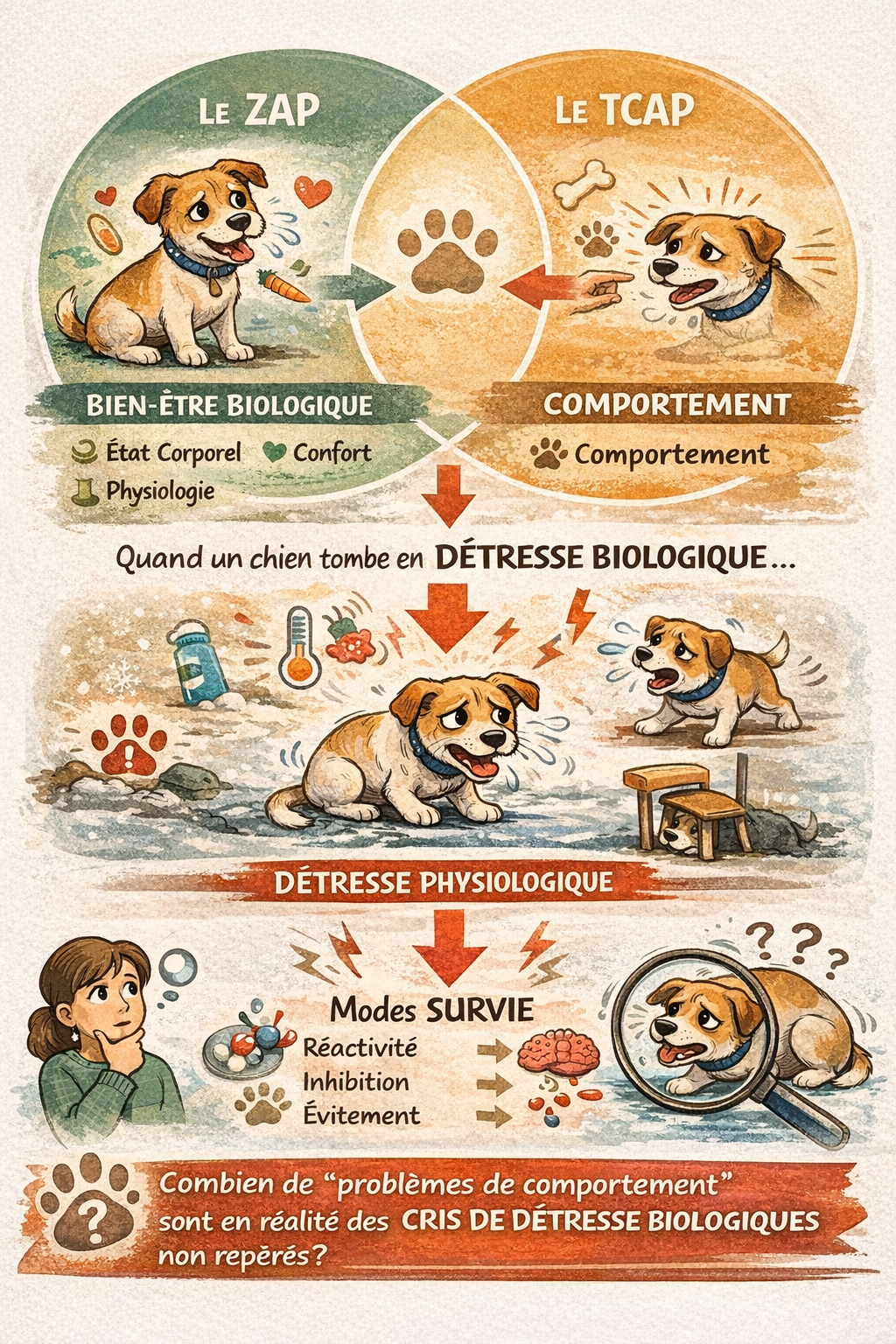
ZAP focuses on the foundations of the species' biological well-being (body condition, comfort, physiology), which naturally complements TCAP, more centered on the behavioral portion and cooperation.
When a dog shifts into biological distress, they can quickly enter physiological distress; and, if this load exceeds their adaptive capacity, we often observe the activation of survival modes (reactivity, inhibition, avoidance along with survival modes triggered by biology), which then complicate learning and collaboration.
But here's the troubling question: how many "behavioral problems" are actually biological distress signals that haven't been identified yet?
The Invisible Connection Between Skin and Brain
Did you know that skin and brain share the same embryonic origin?
That they remain connected throughout life by a bidirectional communication axis that neuroscience is only beginning to understand?
This discovery changes everything. Absolutely everything.
Because it means that skin discomfort is never "just" a skin problem. It's a direct message sent to the central nervous system. An alarm signal that triggers hormonal cascades, modifies brain chemistry, transforms how the animal perceives and reacts to the world.
What if every itch was a cognitive interruption?What if every skin irritation literally decreased learning capacity?
The Secret Your Brush Doesn't Reveal
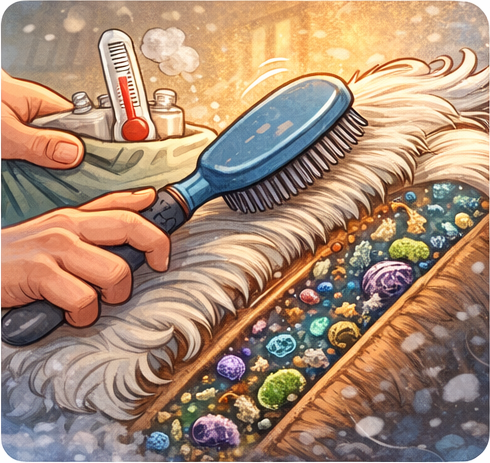
Beneath each hair hides a universe. Billions of microorganisms that aren't invaders, but allies. A sophisticated microbiome that does far more than "protect" the skin.
It produces neurotransmitters. It communicates with the immune system. It influences mood, stress, even the ability to create social bonds.
But here's the trap: certain grooming practices, even performed with the best intentions, can...
Destroy this ecosystem in minutes.
Intensive shedding reduction programs in fall or winter that disrupt the natural cycle. Shaving a short-haired dog that compromises their thermal defenses. Acute stress during grooming that compromises the immune system and triggers skin or coat problems - creating this vicious cycle where care becomes the source of the problem.
Excessive de-shedding during cold seasons that forces the animal to constantly burn energy just to maintain their temperature - energy that will no longer be available for learning, cooperating, thriving.
And what about overly frequent baths that force the skin microbiome to completely rebuild while altering the hydrolipidic film? Products with the wrong pH that sabotage the skin barrier with each use?
How many animals suffer in silence because this connection hasn't been established?
The Invisible Load That Breaks Everything
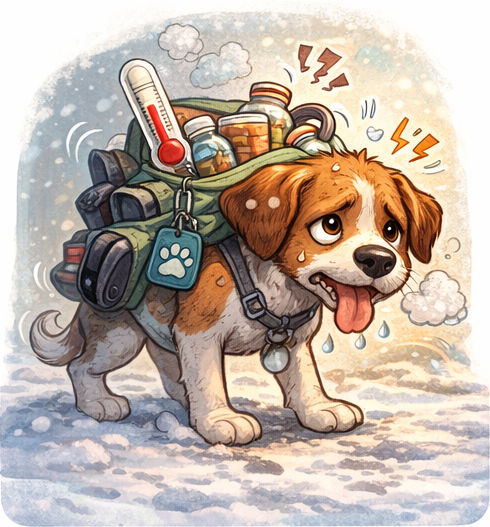
Imagine carrying a backpack. Light at first. Then we add chronic itching. Then joint pain. Then thermal discomfort. Then hormonal imbalance. Then a stressful environment.
Each element seems manageable alone. But together?
This is called allostatic load - that breaking point where the organism has no more resources to adapt. Where survival systems take control. Where the animal you thought was "stubborn" or "aggressive" is simply... overwhelmed.
What if you could see this load before it breaks the animal?What if you could lighten it before problematic behaviors appear?
The ZAP + TCAP Equation
ZAP + TCAP = ?
The answer isn't simply "animal welfare." It's much deeper than that.
Because an animal whose skin is soothed, whose coat is comfortable, whose body condition is optimal... doesn't just feel better physically.
They release cognitive resources. Resources that were mobilized 24/7 to manage discomfort, cope with pain, survive constant physiological stress.
Suddenly, these resources become available for something else.
For learning.
For creating bonds.
For cooperating.
For thriving.
It's like trying to solve a complex mathematical equation while having a migraine. Technically possible... but why make life complicated?
ZAP doesn't replace behavioral work. It makes it possible.
The Seven Pillars of the ZAP Approach
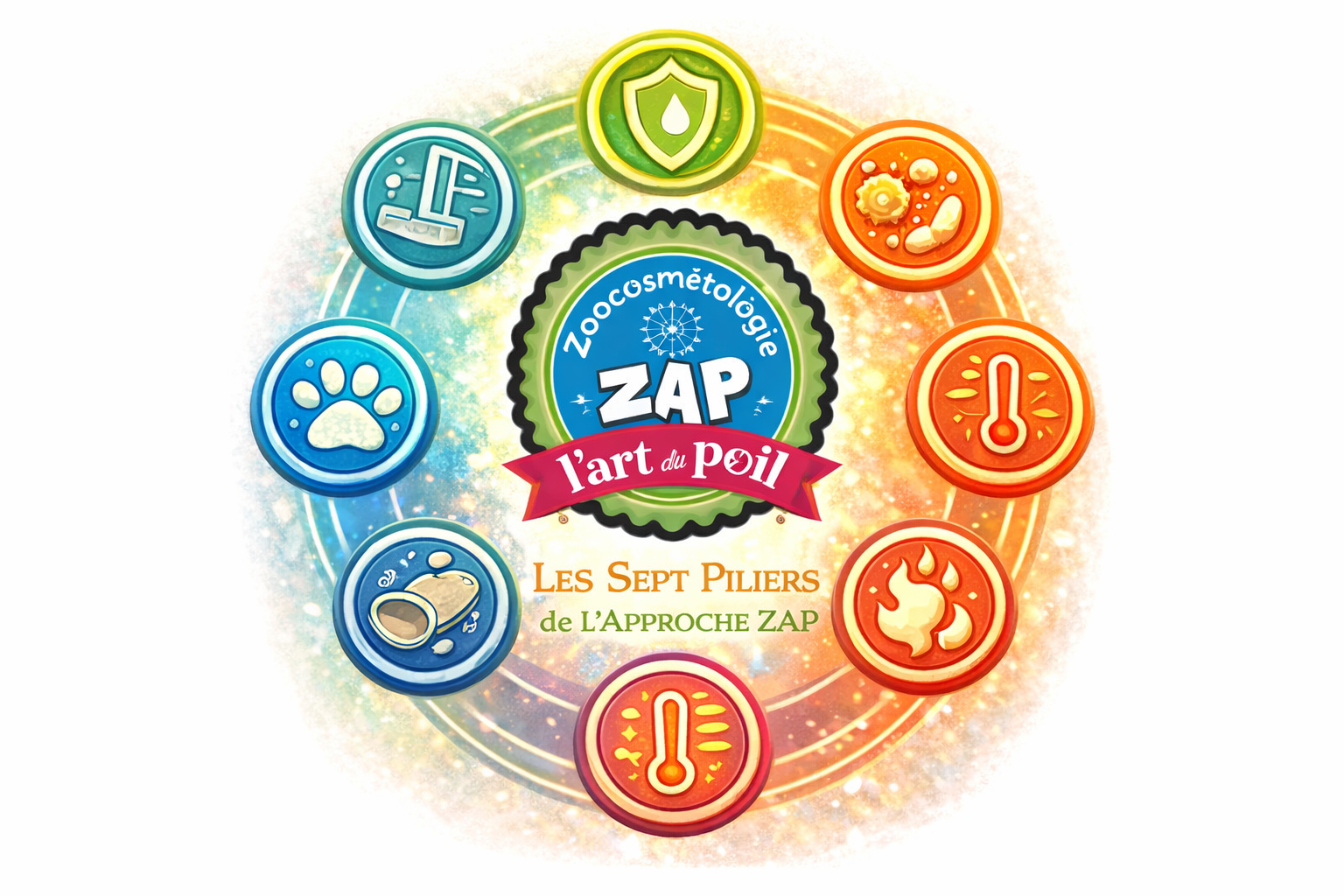
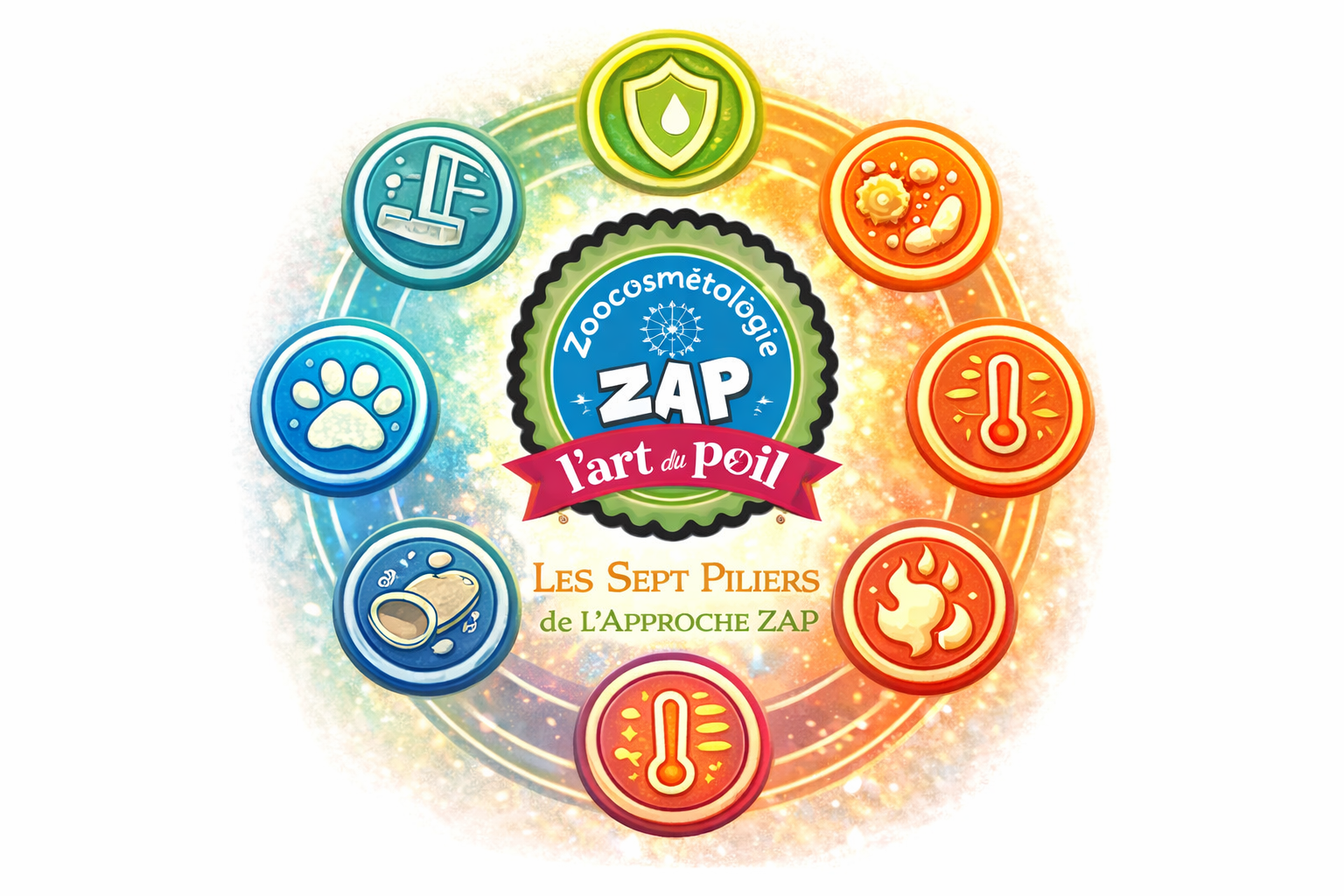
There are seven fundamental pillars that professionals trained in the ZAP approach master. Seven dimensions that intersect and mutually reinforce each other to create what could be called... the foundation of possibility.
Some concern what the eye can see. Others touch on invisible but essential balances. A few challenge current industry practices.
Skin barrier assessment - beyond visual observation. It's about understanding what each signal reveals about the animal's internal state.
Respect for skin pH - did you know that using a "dog" product with the wrong pH can sabotage skin health for weeks? That dogs and cats have radically different needs from humans... and even from each other?
Microbiome preservation- this invisible community that makes the difference between a resilient animal and a chronically vulnerable one. How to protect it? How to nourish it? When to intervene and when to let it be?
Sensory comfort - because a bath can become a traumatic memory that alters the animal's relationship with care for years to come. Or... it can become a soothing ritual that strengthens the bond and decreases stress. The difference lies in attention to sensory and emotional details.
Inflammation management - that silent flame burning in the background, draining resources, maintaining the animal in a permanent survival state. How to identify it before it becomes obvious? How to soothe it without suppressing it?
Thermoregulation preservation - because forcing an animal to burn energy just to maintain their temperature is stealing resources they need for everything else. The natural shedding cycle isn't a problem to solve, it's biological intelligence to respect.
Natural protection preservation - that sophisticated shield perfected by millions of years of evolution. The hydrolipidic film, hair structure, undercoat density... Each element has a role. Each intervention has consequences.
The Question That Changes Everything
Here's what we now know with certainty: animal welfare is indivisible.
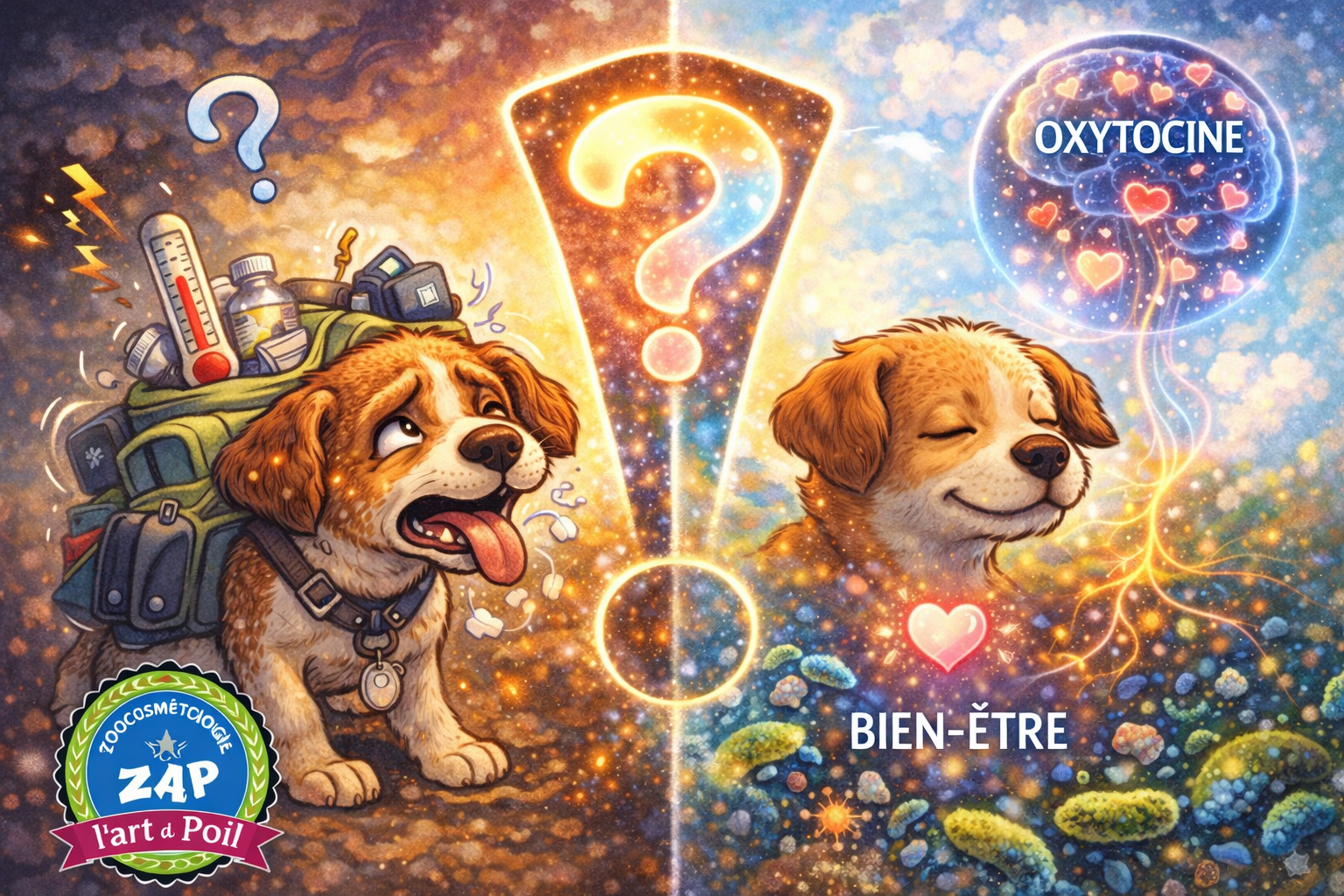
We cannot separate body from mind.
We cannot ignore biology and hope to solve behavior.
We cannot ask an animal to "behave well" when their body is screaming in distress.
Does this connection between biology and behavior deserve more attention in our practice?Can biological signals guide us toward earlier interventions?How can zoocosmetic care truly transform an animal's overall well-being?
The Animal You Don't See Yet
There's the animal in front of you. The one you brush, bathe, care for to the best of your current knowledge.
And then there's the animal that could exist. The one no longer stuck in survival mode. The one whose immune system functions optimally. The one who can finally access their full cognitive and emotional capacities.
The one the ZAP approach reveals.
Because improving biological state isn't just about comfort. It's releasing potential. It's removing invisible obstacles that prevent the animal from being fully present, fully capable, fully themselves.
The Silent Dialogue Between Your Hands and Their Brain
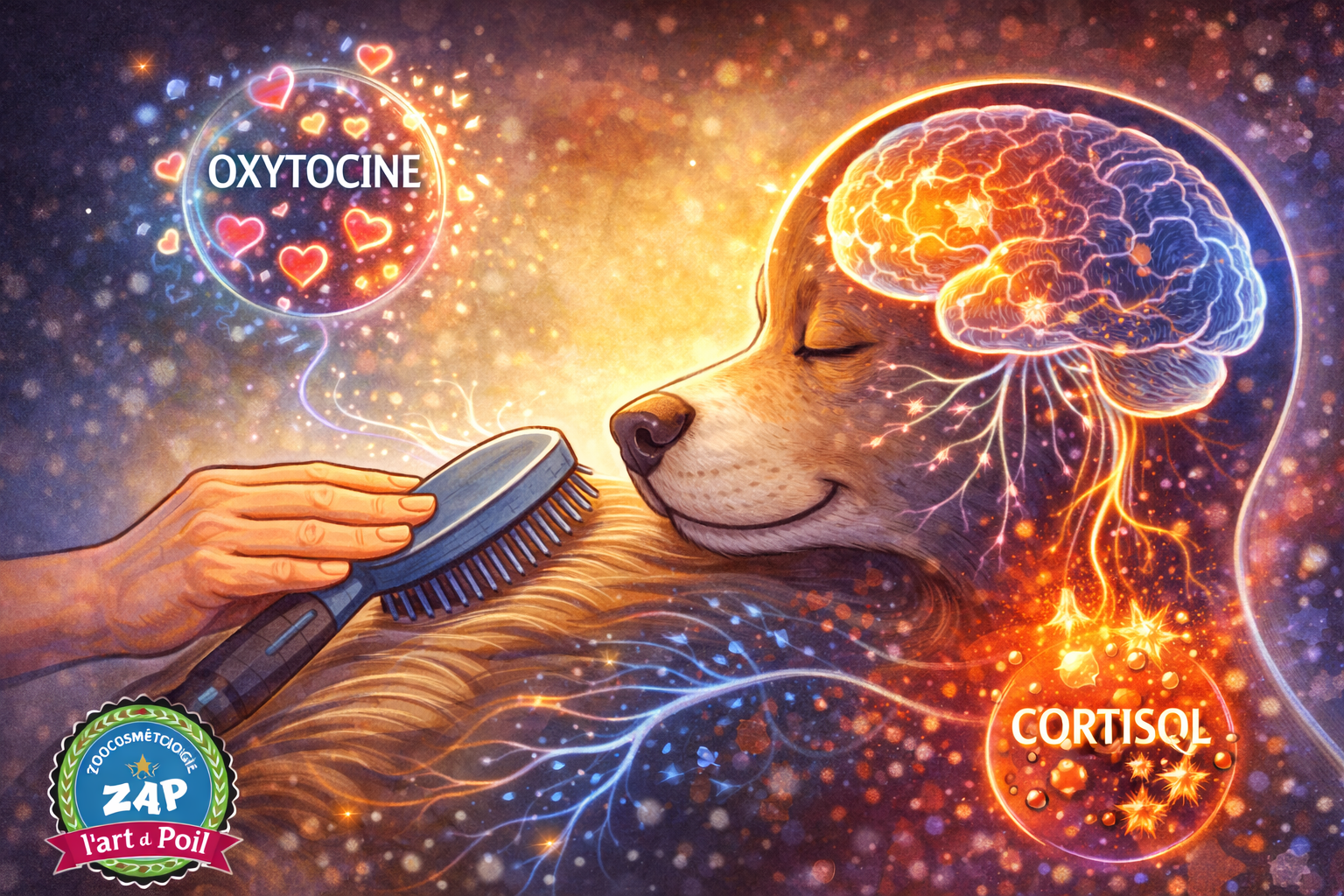
Every touch during grooming sends messages. Chemical, hormonal, neurological messages.
Brushing performed with awareness and technique can stimulate oxytocin production - the attachment and well-being hormone - while decreasing cortisol. But performed without this understanding? It can trigger the opposite effect.
The difference between these two scenarios isn't visible to the naked eye. But it's lived in the animal's body.
Neuroscience reveals fascinating information about this tactile connection. About how a simple gesture can activate cascades of well-being... or stress. About why some animals instantly relax under certain approaches, and tense up with others.
It's not magic. It's biology applied with intention.
What the Signs Tell You
Dull coat. Unusual body odor. Localized licking area. Seasonal itching.
These signs may seem isolated at first glance. Symptoms to treat individually.
But with understanding of the ZAP approach, they become sentences in a complex dialogue. Clues about what's happening inside. Opportunities for early intervention before the situation intensifies.
What if you could decode this silent language?What if you could intervene when it truly makes a difference?
The Missing Alliance
Veterinarians. Groomers. Behavioral groomers. Dog trainers. Behaviorists.
Traditionally, each works in their own universe. Each sees their part of the puzzle.
But the ZAP approach reveals something powerful: when these professionals collaborate with a common understanding of the biology-behavior connection, the impact multiplies.
The groomer can identify signals during care. The trainer and behavioral groomer who understands allostatic load can adapt their approach considering physiological state. The behaviorist who integrates body condition into their evaluation gets a more complete picture of the situation.
What if you enriched your practice with this global understanding?What if you developed this integrative vision of animal welfare?
The Transformation That Begins With a Decision
There's a before and after in understanding animal welfare.
A before where we treated symptoms without seeing causes.
An after where we understand interconnected systems.
A before where grooming was primarily aesthetic.
An after where it becomes a powerful therapeutic tool.
A before where behavior and biology were separated.
An after where we recognize their constant and inseparable dance.
Which side of this transformation do you want to be on?
What This Approach Changes Concretely
For the animal: Less physiological stress. More resources to learn and thrive. A life where biological comfort supports behavioral well-being.
For the professional: A more complete understanding that enriches your practice. Additional tools to support complex situations. Smoother collaboration with other specialists through a common language.
For the relationship: New depth. Understanding that goes beyond the superficial. Results that transform not only the animal, but also how their human perceives and interacts with them.
The ZAP approach isn't just a series of techniques. It's a shift in perspective in how we understand and support animals.
It's developing a more complete vision.
It's intervening preventively and respectfully.
It's contributing to the transition from an animal who survives to an animal who thrives.
The knowledge exists. The tools are available.
The only question remaining: are you ready to deepen your understanding of this approach?---
To learn more about ZAP Certification and discover how this approach can transform your professional practice and the well-being of the animals you support, registration is now open.
Because understanding the invisible connection between biology and behavior... is opening new possibilities for animal welfare.